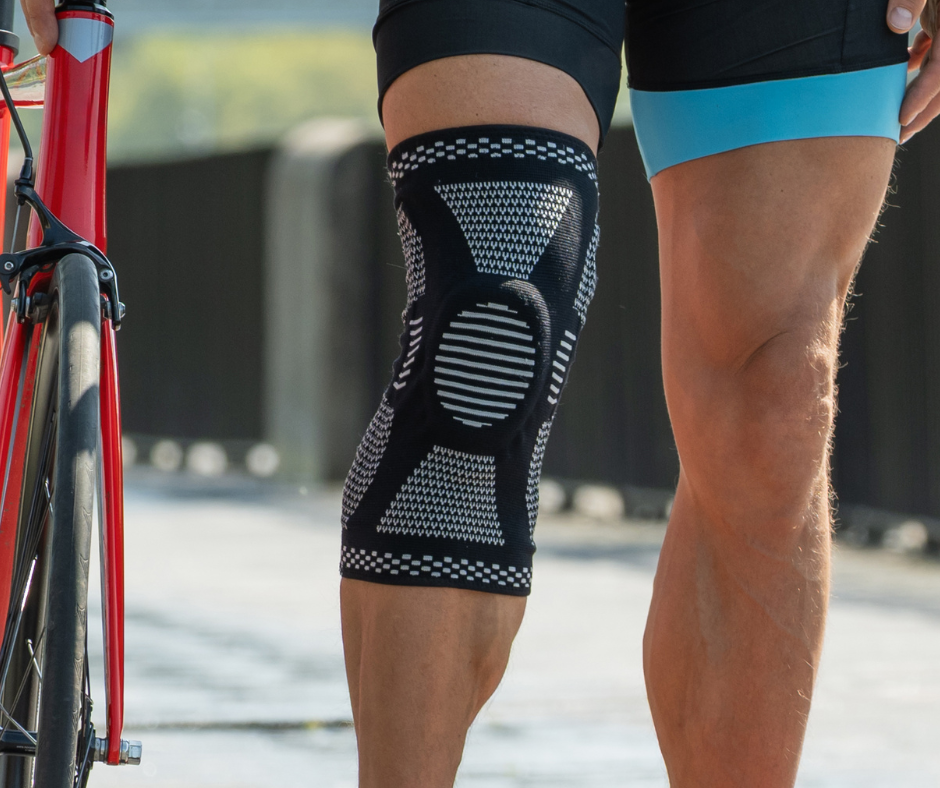

Knee arthritis can make everyday movement feel harder than it should. Walking through the house, getting up from a chair, using stairs, shopping, or standing in the kitchen may become uncomfortable when the knee feels stiff, weak, or painful.
Because of this, many seniors and caregivers ask a practical question:
Do knee braces help seniors with arthritis pain?
The simple answer is: a knee brace may help some seniors feel more supported and comfortable, but it will not cure arthritis or permanently remove knee pain.
A knee brace can be useful when it matches the senior’s needs, fits properly, and is used safely. Some braces provide gentle compression. Others add side support or help reduce pressure on part of the knee. The best choice depends on the type of arthritis discomfort, walking ability, balance, knee stability, and daily activity level.
This guide explains how knee braces may help seniors with arthritis pain, which types are commonly used, what to look for before buying, and what mistakes to avoid.
What Is Knee Arthritis?
Knee arthritis usually means the knee joint has become irritated, painful, stiff, or less comfortable to move. One of the most common types in older adults is osteoarthritis.
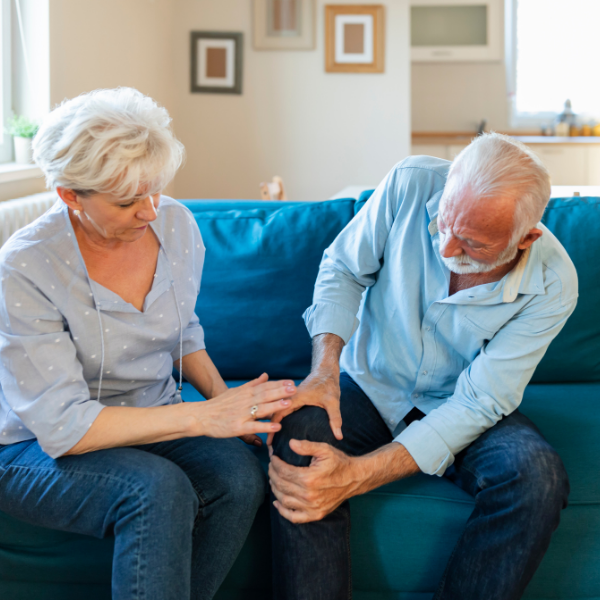
Osteoarthritis happens when the tissue that cushions the ends of bones in the joint changes over time. This may lead to pain, stiffness, swelling, and reduced movement. Arthritis can affect daily activities such as walking, climbing stairs, bending, and standing.
Knee arthritis may feel different from person to person. Some seniors feel mild stiffness in the morning. Others feel pain during walking, swelling after activity, or weakness when using stairs.
A knee brace does not reverse arthritis, but it may help support the joint during daily movement.
How Knee Braces May Help Seniors with Arthritis Pain
Knee braces are designed to support the knee in different ways. The exact benefit depends on the brace type and the senior’s condition.
Mayo Clinic explains that knee pain treatment depends on the cause, and treatment plans may include physical therapy, strengthening exercises, and different types of support depending on the person’s needs.
A knee brace may help seniors by:
- Adding support around the knee
- Helping the joint feel more stable
- Providing gentle compression
- Supporting confidence during walking
- Reducing strain during stairs or standing
- Helping with daily mobility when used correctly
The NHS also notes that leg braces and supports may help with osteoarthritis-related mobility concerns, along with tools such as walking aids and supportive footwear.
The key point is that braces are support tools. They may make movement feel easier for some seniors, but they are not a cure.
Do Knee Braces Work for Everyone?
No. Knee braces do not work the same way for everyone.
Some seniors feel immediate support from a brace. Others find braces uncomfortable, bulky, too tight, or difficult to put on. Some may need a different type of brace, while others may benefit more from physical therapy, strengthening, weight management, supportive shoes, a cane, or other mobility support.
A knee brace is more likely to be helpful when:
- It fits correctly
- It matches the type of knee discomfort
- It is comfortable enough to wear
- It does not slide down
- It does not irritate the skin
- It supports the senior’s actual daily activity
- It is not used as a replacement for needed medical care
A knee brace is less likely to help if it is the wrong size, too stiff, too loose, too tight, or not appropriate for the senior’s level of instability.
Types of Knee Braces for Seniors with Arthritis
Different knee braces provide different levels of support. Seniors and caregivers should understand the main types before buying.
Quick Comparison: Knee Brace Types for Arthritis Support
| Knee Brace Type | Support Level | Best For | Senior-Friendly Notes |
|---|---|---|---|
| Compression Knee Sleeve | Light to moderate | Mild stiffness, light swelling, daily comfort | Slim but may be hard to pull on |
| Wraparound Knee Brace | Moderate | Arthritis discomfort, adjustable daily support | Often easier for seniors to put on |
| Hinged Knee Brace | Moderate to firm | Weak knees, instability, stairs | More supportive but can feel bulky |
| Open Patella Knee Brace | Moderate | Kneecap comfort and general support | Helps reduce pressure directly over kneecap |
| Unloader Knee Brace | Firm and specialized | Certain types of knee osteoarthritis | Best chosen with professional guidance |
Compression Knee Sleeves for Mild Arthritis Discomfort
A compression knee sleeve is a stretchy support that slides over the knee. It provides gentle pressure around the joint.
This type may be useful for seniors with mild stiffness, light swelling, or general knee discomfort during daily movement.
Best For
Compression sleeves may be helpful for:
- Mild arthritis discomfort
- Morning stiffness
- Light swelling
- Short walks
- Errands
- Gentle activity
- Seniors who want a low-profile option
A sleeve may be a good starting point when the knee feels uncomfortable but still stable.
Product Suggestion
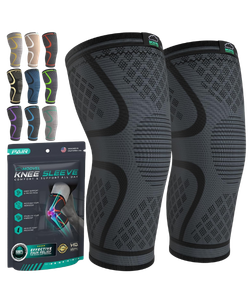
Product Type: Compression Knee Sleeve
Best For: Seniors with mild arthritis stiffness, light swelling, or daily walking discomfort
Key Features: Soft compression, breathable material, flexible fit, non-slip grip, clear sizing options
Adjustable Wraparound Knee Braces
A wraparound knee brace opens fully and fastens around the knee with straps. This makes it different from a pull-on sleeve.
For many seniors, a wraparound brace is easier to use because it does not need to be pulled over the foot, ankle, and calf.
Best For
Wraparound knee braces may be useful for:
- Seniors with arthritis in the hands
- Limited bending
- Swollen knees
- Larger legs
- Mild to moderate knee discomfort
- Daily walking support
- Caregivers helping with brace use
The biggest benefit is adjustability. If the knee feels different throughout the day, straps can usually be loosened or tightened.
Product Suggestion
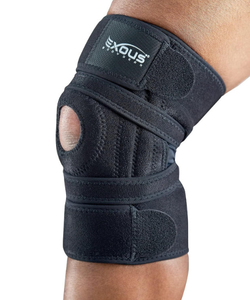
Product Type: Adjustable Wraparound Knee Brace
Best For: Seniors who need easy-on knee support for arthritis discomfort and daily movement
Key Features: Adjustable straps, open wrap design, soft lining, non-slip fit, comfortable daily support
Hinged Knee Braces for Weak or Unstable Knees
A hinged knee brace usually has side supports or hinges that help control movement. This type may be helpful when the knee feels weak, shaky, or less stable.
For seniors with arthritis pain and instability, a hinged brace may provide more support than a simple sleeve.
Best For
Hinged knee braces may be useful for:
- Weak knees
- Mild instability
- Trouble with stairs
- Longer walks
- Knees that feel like they may buckle
- Seniors who need stronger side support
Hinged braces can feel bulkier than sleeves, so comfort and fit are especially important.
Product Suggestion
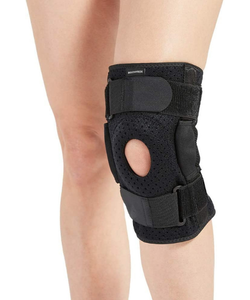
Product Type: Hinged Knee Brace
Best For: Seniors with arthritis discomfort, weak knees, or mild instability during walking or stairs
Key Features: Side stabilizers, adjustable straps, open patella design, supportive frame, secure fit
Open Patella Knee Braces
An open patella knee brace has a hole or opening around the kneecap. Some seniors find this more comfortable because it reduces direct pressure over the kneecap.
This type may also include straps, compression material, or side stabilizers.
Best For
Open patella braces may be useful for:
- Kneecap discomfort
- Front-of-knee pain
- General arthritis support
- Walking support
- Seniors who dislike pressure directly on the kneecap
The brace should not press too hard around the kneecap. It should feel supportive, not painful.
Product Suggestion
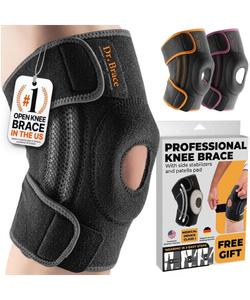
Product Type: Open Patella Knee Brace
Best For: Seniors who want arthritis knee support without direct pressure over the kneecap
Key Features: Open kneecap design, adjustable compression, soft edges, stable fit, breathable fabric
Unloader Knee Braces for Osteoarthritis
An unloader knee brace is a more specialized brace. It is designed to shift pressure away from one side of the knee.
This type is often discussed for people with knee osteoarthritis that affects one side of the knee more than the other. Mass General Brigham explains that unloader braces are mostly used for people with arthritis on one side of the knee and may help shift weight away from the worn side.
The American Academy of Orthopaedic Surgeons guideline says brace treatment could be used to improve function, pain, and quality of life in patients with knee osteoarthritis, although the right approach depends on the person.
Best For
Unloader knee braces may be useful for:
- Certain types of knee osteoarthritis
- Pain mostly on one side of the knee
- Seniors advised to use one by a professional
- People who need more structured support
This is not usually the simplest brace to buy online without guidance. Fit and alignment matter.
Product Suggestion
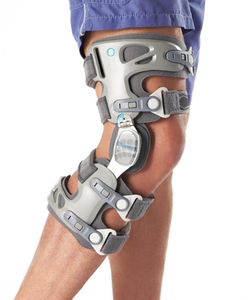
Product Type: Unloader Knee Brace
Best For: Seniors with specific osteoarthritis support needs after professional guidance
Key Features: Pressure-shifting design, adjustable frame, firm side support, proper sizing options
When a Knee Brace May Be Helpful for Seniors
A knee brace may be worth considering when arthritis discomfort affects daily movement.
Common situations include:
- Walking around the house
- Standing in the kitchen
- Getting up from a chair
- Going shopping
- Climbing stairs
- Walking on sidewalks
- Doing light gardening
- Moving around during errands
A brace may also be helpful when a senior wants extra confidence during movement.
However, if knee pain is severe, sudden, worsening, or connected to a fall, swelling, redness, heat, or inability to bear weight, it is better to seek professional guidance instead of relying only on a brace.
Knee Brace vs Other Support Options
A knee brace is only one support tool. Some seniors may also benefit from supportive shoes, a cane, gentle strengthening, weight management, or home safety changes.
| Support Option | May Help With | Best For |
| Knee Brace | Knee support and stability | Arthritis discomfort, weak knees, daily walking |
| Compression Sleeve | Light pressure and warmth | Mild stiffness and light swelling |
| Walking Cane | Balance and pressure reduction | One-sided knee pain or walking confidence |
| Supportive Shoes | Shock absorption and safer walking | Daily mobility and joint comfort |
| Chair Support | Easier sitting and standing | Seniors with knee or hip stiffness |
| Gentle Exercise | Strength and mobility support | Long-term joint function |
A brace may work better when combined with other practical supports, not used alone.
Buyer’s Guide: How to Choose a Knee Brace for Arthritis Pain
The best knee brace for seniors with arthritis pain should be comfortable, supportive, easy to use, and appropriate for the person’s activity level.
1. Match the Brace to the Support Need
Choose based on the main problem:
- Mild stiffness: compression sleeve
- Adjustable comfort: wraparound brace
- Weak knees: hinged brace
- Kneecap pressure: open patella brace
- One-sided osteoarthritis: unloader brace with guidance
2. Choose an Easy-On Design
Many seniors struggle with tight pull-on sleeves. A wraparound brace may be easier because it opens fully and secures with straps.
This is helpful for seniors with:
- Hand arthritis
- Poor grip strength
- Limited bending
- Balance concerns
- Larger calves or thighs
- Swelling that changes during the day
3. Measure Before Buying
Do not guess the size.
Measure according to the product sizing chart. Some braces require measurements above the knee, around the knee, and below the knee.
A brace that is too tight may cause discomfort. A brace that is too loose may slide down and become unsafe.
4. Look for Breathable Material
Senior skin can be sensitive. Choose a brace with soft, breathable material and smooth edges.
Avoid braces that rub, pinch, trap too much heat, or cause irritation behind the knee.
5. Check Strap Quality
If choosing an adjustable brace, straps should feel secure but not harsh. They should be easy to fasten and loosen.
6. Think About Clothing and Daily Use
A bulky brace may not fit well under pants. A slim sleeve may fit better but may not provide enough support.
The best brace is one the senior can actually use comfortably.
Safety and Comfort Tips for Seniors
Knee braces should improve comfort and confidence, not create new problems.
Use these tips:
- Start by wearing the brace for short periods.
- Check the skin after removing it.
- Remove the brace if it causes numbness or tingling.
- Avoid wearing it too tight.
- Make sure it does not slide down.
- Keep the brace clean and dry.
- Wear supportive shoes with good traction.
- Use handrails on stairs.
- Use a cane or walker if balance is still a concern.
- Do not sleep in a brace unless advised by a professional.
If the brace changes walking posture in a bad way, causes pain elsewhere, or feels unstable, it may not be the right option.
Common Mistakes Seniors Should Avoid
Buying the Most Supportive Brace Automatically
More support is not always better. A senior with mild stiffness may not need a heavy hinged brace.
Ignoring the Sizing Chart
Every brand can fit differently. Measuring is important.
Wearing the Brace Too Tight
Tightness can cause discomfort, skin marks, numbness, or circulation concerns.
Choosing a Pull-On Sleeve When Mobility Is Limited
If bending is difficult, a wraparound brace may be more practical.
Expecting a Brace to Cure Arthritis
A knee brace may support comfort and mobility, but it does not cure arthritis or reverse joint changes.
Using a Brace Instead of Addressing Fall Risk
If balance is poor, a brace alone may not be enough. A cane, walker, footwear change, or home safety adjustment may be needed.
FAQs
Do knee braces help seniors with arthritis pain?
Knee braces may help some seniors with arthritis pain by providing support, compression, or stability during daily movement. They do not cure arthritis, and results can vary.
What type of knee brace is best for arthritis in seniors?
For mild stiffness, a compression sleeve may help. For easier use and adjustable comfort, a wraparound brace may be better. For weak or unstable knees, a hinged brace may provide more support. For certain osteoarthritis patterns, an unloader brace may be considered with professional guidance.
Can seniors wear a knee brace every day?
Some seniors wear a knee brace during walking, errands, or daily activities. It is best to start slowly, check the skin, and avoid wearing it too tight or for too long without breaks.
Is a knee sleeve enough for arthritis?
A knee sleeve may be enough for mild stiffness or light swelling. If the knee feels weak, unstable, or difficult to trust on stairs, a more structured brace may be better.
Should seniors wear a knee brace while walking?
A knee brace may help some seniors feel more supported while walking. It should fit well, stay in place, and not cause rubbing, numbness, or discomfort.
What is the easiest knee brace for seniors to put on?
A wraparound knee brace is often easier because it opens fully and fastens around the knee with straps. This can be helpful for seniors with limited bending or hand arthritis.
Can a knee brace make arthritis pain worse?
Yes, if it is too tight, poorly fitted, too bulky, or the wrong type. Seniors should remove the brace if it causes numbness, tingling, sharp pain, or skin irritation.
Do knee braces help with stairs?
A supportive knee brace may help some seniors feel more stable on stairs. A hinged brace or brace with side support may be more helpful than a simple sleeve when the knee feels weak.
Final Thoughts
Knee braces may help seniors with arthritis pain by adding support, compression, and stability during daily movement. They are not a cure, but they can be a useful comfort and mobility tool when chosen carefully.
For mild stiffness, a compression sleeve may be enough. For easier daily use, a wraparound brace may be more practical. For weak or unstable knees, a hinged brace may offer stronger support. For certain types of knee osteoarthritis, an unloader brace may be worth discussing with a healthcare professional.
The best knee brace is not always the strongest or most expensive one. It is the one that fits well, feels comfortable, is easy to put on, and supports the senior’s real daily needs.
Best Knee Brace for Seniors with Arthritis (2026 Guide)
Best Knee Brace for Overweight Seniors
Best Supplements for Hip Pain After 60 (2026 Guide)
Best Joint Supplements for Seniors Over 60 (2026 Guide)
What Supplements Are Commonly Used for Joint Support After 60?
Best Walking Canes for Seniors with Knee Pain: A Practical Buying Guide
Why Hip Pain Gets Worse After 60: Common Reasons and Simple Support Tips